
- 2025
- Conversations
‘It’s Not Just Getting In, It’s Staying In’: The EDI Panel on What Real Inclusion Looks Like
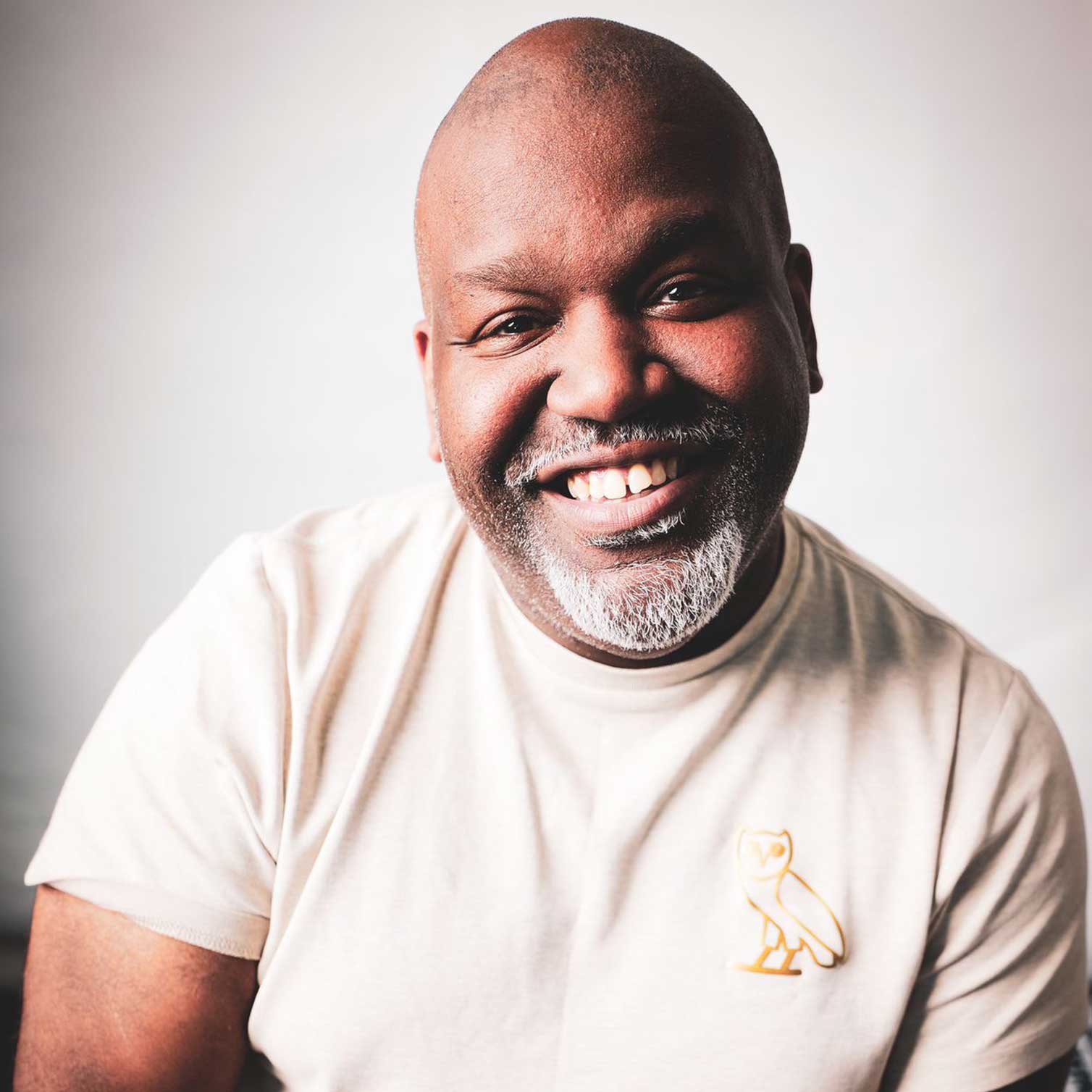
A conversation with Wizdom Layne, Foreda Begum and Lyle Bignon
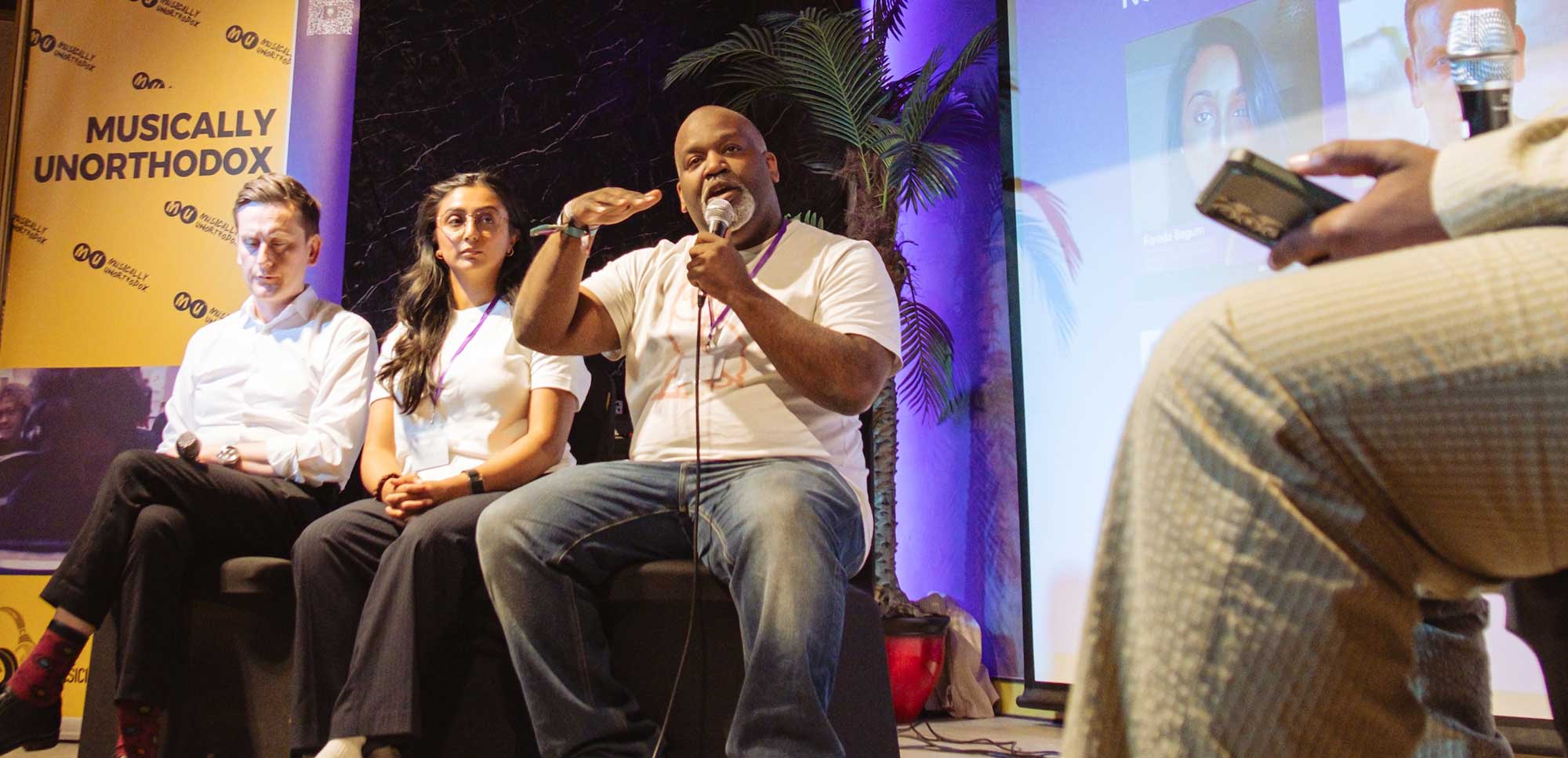
Ashley Samuels-Mckenzie opened the panel with a poem.
That had never happened before. Lyle Bignon, who has done “quite a few panel discussions”, confirmed it.
“First time we’ve had a poem at the start. So wicked.”
It set the tone for a conversation that was never going to be a box-ticking exercise. The topic: non-inclusive culture in the music industry. The panel: three people with very different professional homes, music education, advertising, consultancy and a shared understanding that the problem runs deeper than most organisations are willing to admit.
By the end, they had named the gap between policy and reality, the difference between getting in and staying in, and the uncomfortable truth that sometimes, the best strategy is to stop asking for permission and build it yourself.
The Class Issue Beneath the Diversity Talk
Wizdom Layne started with an observation that cut through the usual EDI framing.
“It’s not even necessarily a colour thing. It’s often a class issue.”
She was part of the PRS Foundation’s Power Up programme, now in its fourth year, designed to support Black leaders and artists. But she was clear about the structural challenge.
“Most of the structures have been created by private school educated people. They work in a particular way. If you haven’t come from that background, even if you do get in, how you navigate and stay in how you respond to opportunity, how you converse in different environments if you’ve never played golf or don’t ski, there are certain conversations you just don’t end up in.”
She gave an example from her time in a youth work programme at a major bank.
“If they’re going to go to a corporate dinner, do they know which knives and forks to use? It’s sometimes not just about getting in the door. It’s about how you safely stay within it.”
Schemes exist. Initiatives are launched. But they often miss the thing that makes progress sustainable beyond the funding cycle.
“They can very easily miss out on the thing that makes it sustainable past the point where I’ve ticked the box for the Arts Council for this funding report.”
The Pub Test
Foreda Begum came from advertising, a world she described as “quite a gatekept industry for a very long time.”
She learned to navigate it, but not without cost.
“I’m Muslim. A lot of the conversations would happen in pubs, with alcohol. I was excluded from a lot of those conversations because I wasn’t going to those places.”
Now she is in a position to tell young people how to navigate without forgoing who they are.
“It’s not about just getting in. It’s staying in. Who to talk to. How to broach conversations.”
She pointed to the democratising effect of social media. People from different backgrounds are speaking out about how to actually get in. Mentors formal and informal are sharing what it takes.
But the responsibility doesn’t end with individuals.
“There is a level of responsibility we have within the industry to pay it forward.”
The Gap Between Policy and Reality
Lyle Bignon brought a working-class, inner-city Irish perspective and a challenge to himself and others.
“That doesn’t mean I don’t have my own biases, my own belief systems that I’m trying to change. I’m making a conscious decision to try and understand the challenges intrinsically, rather than just at surface level. That’s a journey I’m still going on.”
He talked about a current project for the BBC around the Black Sabbath events in Birmingham.
“Making sure everybody that’s working on the production side, as well as the bands I’m booking, are as representative of my city as possible. It is still really difficult, even with consciousness and awareness. I still hit my own barriers.”
His assessment of the industry’s progress was measured.
“There are schemes doing what they can in terms of not just EDI strategies, but the delivery of them. Because it’s all well and good having a policy. But what does it look like now? In six months? In 18 months? Are you really going to have that 50:50 agenda split? Are you really going to have people in senior leadership positions?”
His conclusion?
“We’re heading in the right direction. But not quick enough.”
The Schemes That Actually Work
When Ashley asked for examples of successful schemes, Wizdom pointed to Power Up but also to the limits of what any single programme can do.
She used her own career shift as an example: from music industry to music education, because there was money in education hubs that didn’t talk to industry.
“There were very few people in there that seemed to have an understanding of both. So I thought, I’ll take this opportunity. But the challenge was it was an entirely different way of communicating.”
She applied that learning to Mobo Unsung, turning it from “kind of an X factor” into an artist accelerator programme.
“With Black music, we don’t tend to do shows that Live Nation support at a lower level. Which means that regardless of how good your live performances are, you never end up doing a festival because none of the bookers who book the festivals come to the shows you’re doing.”
The solution? Get them onto The Great Escape. South by Southwest. Glastonbury.
“Even if you’re performing in front of 14 people crawling out of bed at 12 o’clock in the afternoon, when you apply for other festivals next year and your bio says ‘I’ve played Glastonbury, I’ve played South by Southwest’, you are much more likely to get interest and support.”
It’s not the performance that matters. It’s the line on the CV.
“It’s the bits that people don’t really talk about.”
The Four Skills That Get You In
Wizdom distilled the entry point to the entire creative industries into four skills.
“If you’ve done any level of events management, if you’ve run a social media channel, if you can edit a video, if you can record a piece of production if you’ve got those four skills, that is the entry point to the industry.”
The challenge? Young people don’t know that.
“Many of the things they’re doing on TikTok is the industry. They just don’t know it, because it needs to be weaponised, for want of a better phrase.”
Her advice to any young person asking how to get in:
“Find someone on Instagram with between 7 and 15,000 followers. Hit them up in the DMs and say, ‘How can I help?’ I guarantee you they probably haven’t got management at that stage. They are drowning in their emails. They cannot keep up with the amount of content they need to create. If you can help with those things? You are in the music industry.”
Reverse Nepotism and Paying It Forward
Foreda introduced a phrase that landed in the room. “Reverse nepotism.”
“We’re all complaining about how people who know people get jobs easily. But I’ve hired people from my family. Not because they’re family. Because I’ve been given the privileged position to be able to give that opportunity to someone.”
She also talked about how Omnicom works with grassroots platforms Amalia, Black Ballad rather than defaulting to Vox or Channel 4.
“What they have is the insight, the cultural connection, and the talent.”
Lyle broadened the point.
“Ultimately this drills down to humanism. If somebody is on their way up and they’re struggling to get a door open, all it takes is a kind word, a pointer, a bit of advice.”
He acknowledged the pressure people feel not to ask “basic” questions.
“Everyone who’s older than you started in your position. That senior music exec had to find out the answer to that question at some point. If you’re a dick and you choose not to answer, you don’t deserve to be in the game.”
The Magic Circle
Wizdom had used the phrase earlier: the music industry is like a magic circle.
“It works because it works. If we don’t tell everybody the trick. As soon as you know what the trick is, it stops being magic.”
Lyle picked it up.
“What comes with keeping it close, the protectionism, is all manner of nasty stuff. All manner of unfairness. There are a lot of people blocking that. A lot of institutional biases and cultures within record labels, within major promoters.”
But Foreda offered a different lens.
“With the democratisation of the creative industries, people becoming their own businesses, sole traders you can actually get paid for your experience. Rather than banging on the doors trying to get into the quote-unquote industry.”
She pointed to Candice Brathwaite as an example: a Black British woman who paved her own way, working only with brands that value her and her community.
“Sometimes it’s too hard to break into something that’s archaic. You have to build it yourself.”
What This Panel Taught Us
The EDI panel was not a complaint session.
It was a diagnosis of where the industry is failing and a map of what to do about it.
On class: The barriers aren’t just about race or gender. They’re about which conversations you’ve been in, which rooms you’ve been in, whether you know which knife to use at a corporate dinner.
On staying power: Getting in is one thing. Staying in navigating, surviving, thriving is another. And most initiatives stop at the door.
On practical skills: Events management. Social media. Video editing. Production. These four things are the entry point. Young people are already doing them. They just don’t know they’re already in the industry.
On paying it forward: Reverse nepotism isn’t a dirty word. If you have a platform, you have a responsibility. A kind word. A pointer. A DM response.
That’s all it takes.
On building your own: If the door won’t open, build a new one. The industry is not the only game in town.
Ashley closed with another poem written in the moment, lifting from what had been said.
“The large fork or the small spoon, a career defining choice.
The experience of other people could be the key to strengthening your voice.
It could be that you find someone from 7 to 15,000 followers.
Sending a message and offering help could be the twist to your story like Oliver’s.
Learn how and why can bring that Morpheus to your Matrix.
It’s what you know then who you know, the key to moving in basics.
Get started. Do something.
Keys to your path to success.
How much you use your mind and your resources?
The true keys to what’s next.”
Speaker details


Watch full panel conversation



Musically Unorthodox Project
PLATFORM
musicallyunorthodox.com
PROGRAMMES
mucm.inmusicinmedia.com
SOCIAL VALUE
socialvalue.inmusicinmedia.com
Contact
Email: [email protected]
Tel: +44 (0) 7762 545 275